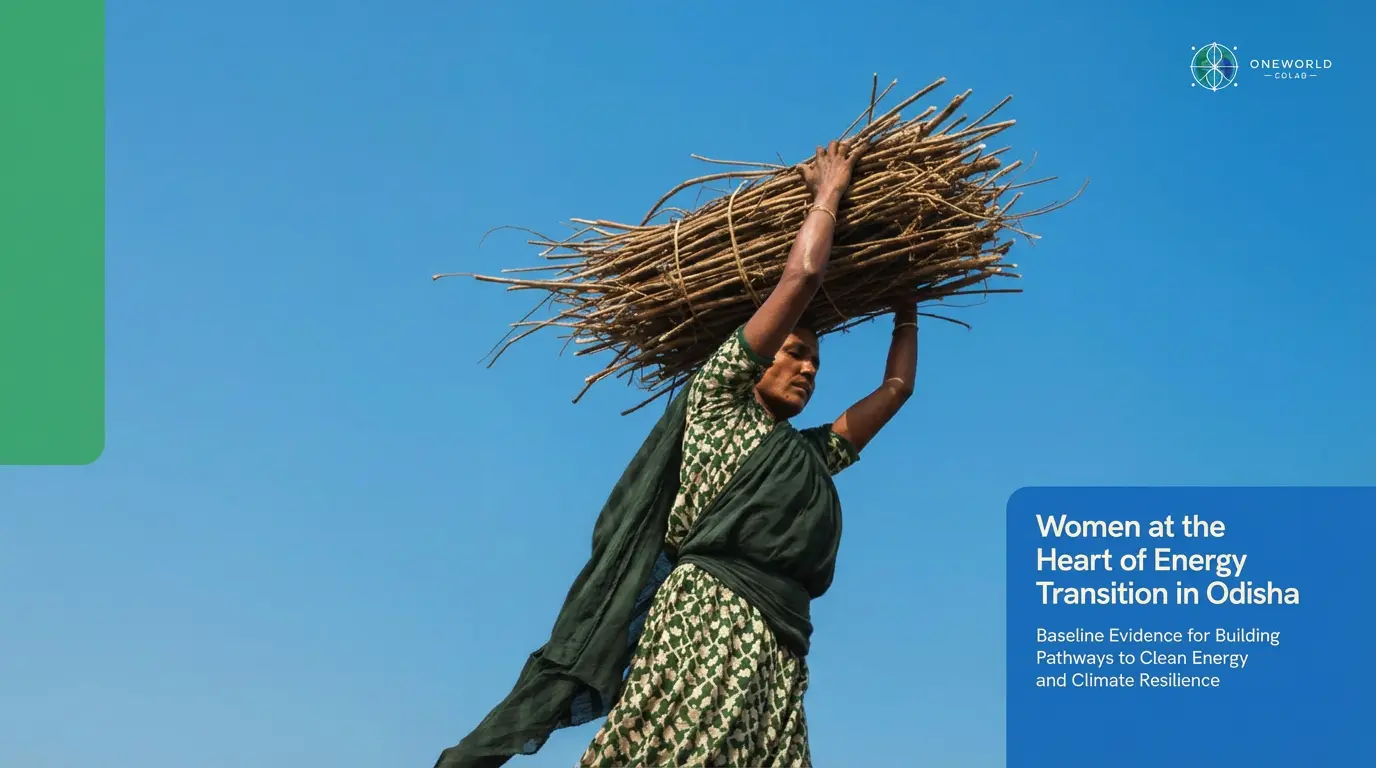
Women at the Heart of Energy Transition in Odisha: Baseline Evidence for Building Pathways to Clean Energy and Climate Resilience
Nearly 90% of women in rural Odisha want to move away from traditional fuels. Yet 87% still cook primarily with firewood. This gap between aspiration and adoption is not about willingness. It is structural, and understanding it is the first step toward closing it.
This baseline study surveyed 611 women across Anugul, Kendrapara, and Koraput in one of India’s most climate-vulnerable states. Combining quantitative analysis with focus group discussions and key informant interviews, the research uncovers what holds women back and, critically, what moves them forward.
Women manage household energy daily but rarely control the decisions that shape it. Two-thirds of strategic energy choices remain outside their hands. Affordability constraints, unreliable grid access, and entrenched norms sustain the status quo.
Yet the evidence points to powerful levers of change. Education and collective membership — through Self-Help Groups and farmer cooperatives — consistently increase women’s readiness to adopt clean energy, lead projects, and access government schemes. These are not marginal effects. They show up clearly in the data and point to where investment and programme design can make the biggest difference.
The study also reveals sharp differences across the three districts, making a strong case for tailored strategies rather than uniform solutions. What works in Koraput may not work in Anugul — and the data helps explain why.
This report offers an evidence base for designing equity-focused, women-led energy transitions rooted in local realities — and a starting point for funders, policymakers, and field teams ready to act on what the evidence shows.
[Download the Full Report] — District-level findings, regression analysis, and actionable recommendations.
[Read the Executive Summary] — Key findings and headline data at a glance.